Forest Society of Maine

Your land trust for Maine's North Woods

Your land trust for Maine's North Woods.
.

  • Facebook
  • Instagram
  • LinkedIn
  • Home
  • About
    • Committed to Diversity
    • All About FSM
    • Mission
    • F.A.Q.’s
    • Meet our Staff
    • Directors and Advisors
    • Job Openings
    • Swan Internship
  • Conserved Lands
    • FSM Conserved Lands
    • Projects Under Way
    • Caring for Conserved Lands
    • Statement of Conservation Position
  • Forests & Climate
    • FSM Conservation and Carbon Sequestration
    • Partnerships to Improve Fish Passage and Climate Resilience
    • Fighting for the Forests’ Future
    • Wood’s Role in Net Zero Carbon Buildings
    • Maine Won’t Wait
    • Forest Carbon Task Force
    • Maine’s Carbon Budget
  • Wabanaki Engagement
    • FSM’s Wabanaki Engagement
    • Organizational Growth
    • Learning / Participation
    • How FSM is Taking Action
    • Resources & More
  • News
    • FSM News & Press
    • Signup for our E-Newsletter
  • Support FSM
    • Ways To Give
    • Financial Statement
    • FSM’s Supporters
  • Accessibility
    • Recite Me Software Info & Guide
  • Contact

Remembering Alan Hutchinson

January 16, 2018 By FSM

The man who took FSM from a file box on his kitchen table to a million acres conserved.

It’s hard to imagine the Forest Society of Maine (FSM) without Alan Hutchinson. In truth, FSM really wasn’t an active land trust before he arrived. In 1984 FSM existed on paper, so that a conservation organization in neighboring New Hampshire could hold easements in Maine, but there was no staff, no office, and no new activity in Maine for more than a decade.

It wasn’t until 1997 when large tracts of Maine forestland were changing hands, that a group of landowners, conservation professionals, and scientists realized that Maine’s North Woods needed a dedicated land trust. They decided to bring FSM to life and hired Alan as the first employee and executive director. Before coming to FSM, Alan served with the Maine Department of Inland Fisheries and Wildlife (IF&W) doing impressive work in various roles, but after 24 years he took a leap of faith and left IF&W to guide a fledgling organization. For the first several months he worked from his kitchen table, boxes of files stacked around him.

Soon after FSM upgraded to office space in downtown Bangor, Jim and Jenness Robbins of Robbins Lumber Company walked through the door. They wanted to discuss conservation options for 23,000 acres they’d purchased around Nicatous Lake. At the time it was a project of monumental proportions and a big test for a new executive director and a young organization. Working with numerous partners, (a practice that Alan made standard operating procedure for FSM), the Nicatous project became the first of many conservation successes.

If I was to use one word to describe Alan it would be ‘credibility.’ He exemplified it.” Maine forestland owner, Jim Robbins

Although completing projects was an important part of what Alan did, he did so much more to help make FSM a leader in conserving Maine forestlands. Perhaps his greatest accomplishment was building an organization with a clear mission and vision for the future. It was slow work that required patience and tenacity, and depended in large part on his ability to bring people with diverse views together around the same table.Paddling on Prong Pond, ME

One of Alan’s amazing talents was to create an environment where there was deep, mutual respect for each other, and an openness to discuss some controversial topics in the most professional manner.” Former FSM board president Bob Burr

Alan was fond of saying, “We have a big tent,” meaning that people from all of the pillars of FSM’s mission–the economic, recreational, ecological, and cultural–could meet and find common ground. He recognized that helping Maine forestland owners and forest products businesses succeed is crucial to forestland conservation. He was also a good listener who could talk to anyone, because he knew that everyone had something to contribute.

Alan was the epitome of great leadership. He had a gracious way of making everyone feel a part of the project—and what incredible projects happened under his leadership. He was a real inspiration.” FSM friend Tarun Johns

Today, FSM has a staff of eight and a monitoring program for large forest easements that is highly regarded nationally. There is an active board of directors and advisory council, who are experts in forest resources, outdoor recreation, natural sciences, Maine history, land trust development, and more. Alan was very proud that FSM was among the first land trusts in Maine and the nation to become accredited through the Land Trust Accreditation Commission. He was deeply aware of FSM’s ‘forever’ commitment to Maine lands, and worked hard to make FSM a strong and resilient organization.

Paddling in the Moosehead Lake region.

I think the most difficult thing to be in the current state of our world is moderate. It takes day-in and day-out personal courage because you are constantly being criticized and questioned from all sides; yet, moderation is often the key to making progress. Alan had that personal courage; the unfailing ability to be calm, to be rational, to listen to all sides; and then to take firm, courageous, but moderate positions.” FSM partner Dick Spencer

One morning last year Alan told a young member of FSM’s staff that his generation had done a lot, both good and bad. “Now,” he said, “it’s up to your generation. It’s up to you.” His statement was a fair challenge, but it is only partially true: regardless of your generation, it is up to all of us to keep going, to keep making the changes we want to see in the world a reality, and to practice the tenacity, patience, and willingness to listen that Alan set as an example for us. Let’s honor Alan and further his legacy by continuing to come together around our shared goal of keeping Maine’s forests as forests for many generations to come.


Article originally published in Forest View, Fall 2017.


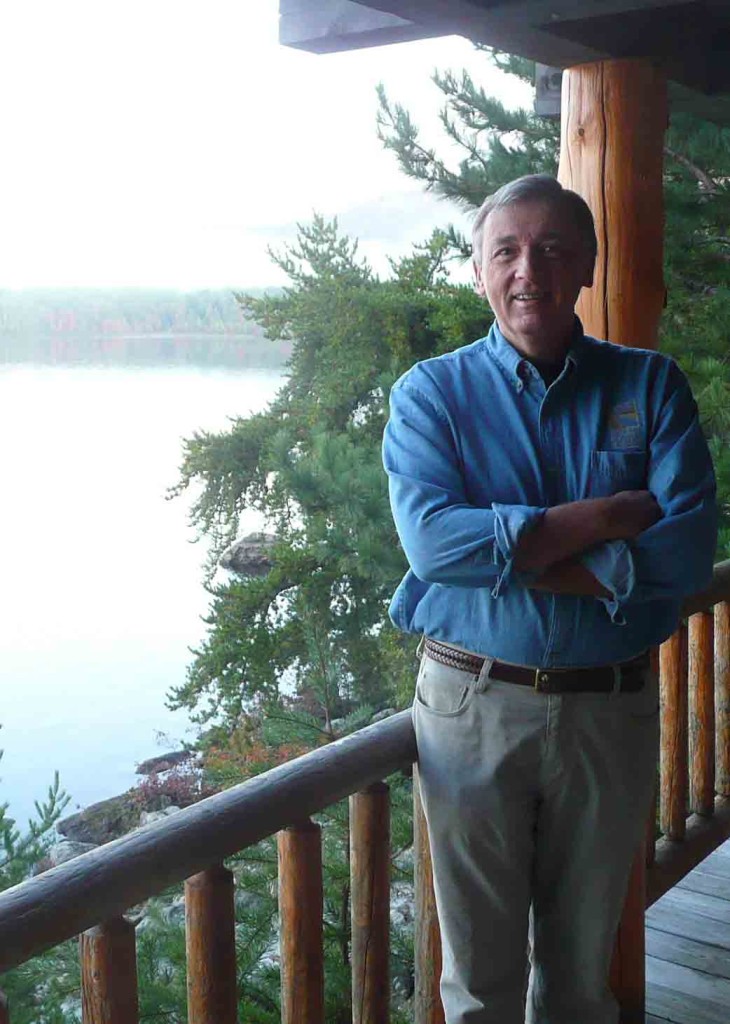
Top photo of Alan Hutchinson by Bruce Kidman.
Filed Under: Blog, News Tagged With: Alan Hutchinson

In Memory of Alan Hutchinson

August 31, 2017 By FSM

Alan Hutchinson

January 1947- August 2017

It is with heavy hearts that we share news of the passing of Alan Hutchinson, executive director of the Forest Society of Maine. He was a tremendous leader and colleague and will be missed by the Forest Society of Maine’s board, staff, friends, and partners. Alan was hired in 1997 as FSM’s executive director (and its first official employee), and continued to lead and grow the organization for the 20 years that followed. Under his guidance FSM has helped to conserve more than one million acres of forestland.

Alan’s achievements and contributions have been very nicely captured in this article from the Portland Press Herald.

There will be a memorial service on Tuesday, September 5 from 5pm to 7pm at Brookings-Smith in Bangor on Center Street. You can read Alan’s obituary here.

Senator Susan Collins' statement about Alan's contributions to conservation and the state of Maine
Senator Susan Collins’ Statement on the Passing of Alan Hutchinson.

Filed Under: Blog, Uncategorized

Working Forests Kept Working: The Working Forest Fund

August 25, 2017 By FSM

Through its Working Forest Fund, The Conservation Fund can purchase large tracts of forestland and hold it until conservation easements are in place to prevent development or conversion to other uses. Image: The Conservation Fund.


Originally published in The Forestry Source, June 2017, used here with permission.
By Andrea Watts

By The Conservation Fund’s estimates, 45 million acres of working forests in the US are at risk of parcelization, conversion to other uses, or a combination of both. Securing conservation easements or purchasing the land outright when it’s up for sale can prevent these scenarios from occurring. However, both options require immediate access to tens or even hundreds of millions of dollars, and for state or federal agencies and land trusts who want to retain working forest landscapes, securing this type of funding often takes years. Bridging this gap between securing multi-million dollar funding and conserving America’s working forests is the purpose of the Conservation Fund’s Working Forest Fund (WFF).

SAF member and WFF Director Brian Dangler has helmed the program since its start in 2010; he was recruited because of his past experience in both forestry and real estate and overseeing the transfer of International Paper’s timberland holdings to The Nature Conservancy and to the Conservation Fund (the Fund) in 2006. This divestiture of large areas of working forestland, coupled with divestitures by other companies, such as Champion International of its working forests in the Northeast, caught the attention of the Fund as a potentially alarming trend.

“With these lands shifting out of ownership from the vertically integrated forest products companies, like International Paper, and into investor groups, TIMOs [timber investment management organization] and REITs [real estate investment trust], the Fund’s leadership realized that this was just a temporary first wave of ownership; and as these funds mature, the timberland could be resold in chunks and smaller pieces, compromising the ability of large working forests to function both ecologically and economically,” Dangler explained.

Having the experience developing working forestland conservation easements through their work with Champion and other projects, the Fund had the confidence to undertake working forest easements throughout the country. Although there were smaller organizations doing similar work before the creation of the WFF, what sets the Fund’s program apart, according to Dangler, is “[our] pioneering effort to do large-scale land holdings.”

“We have to be ready for when these lands come out of these investor vehicles, because it’s all about timing,” he said. “We have to have the cash to be able to compete with everybody else, other investors at auction, and we also have to have the time in order to match the available permanent conservation funding. The Working Forest Fund does both of those things—it allows us to compete at auction like any other timberland buyer, because we have readily available bridge capital (cash), and then we’re able to buy and hold these properties for the amount of time it takes to secure permanent conservation out-sale funding, which may take several years.”

“[The Fund is] able to move swiftly to acquire forestland that goes on the market and stabilize it while a working forest conservation easement is designed and then implemented,” said Karin Tilberg, deputy director of the Forest Society of Maine (FSM), a nationally accredited land trust that has recently worked with the Fund to secure funding through the WFF on a number of projects. “I can’t emphasize enough how important that is.”

The Fund acquires its funding from philanthropic grants and loans, and borrows money from traditional sources such as banks and nontraditional sources such as state water boards.

“The magic here is that as we continue to grow the program, we buy the properties, sell an easement, resell the property back into the private market and we roll all that money back into the next deal,” Dangler explained. “The fund grows over time so any profits go into furthering the mission, protecting more working forests.”

Once the Fund owns the land, they develop a conservation easement with the federal or state agency or land trust who will eventually hold the easement to incorporate their objectives into the easement document; in addition, they also develop a forest management plan. With the conservation easements in place, the land is then placed on the open market and sold to a private buyer.

“The real goal [of WFF] is to maximize the conservation footprint, to keep as much large intact working forests whole so that their integrity will help communities, and keep it on the tax rolls, keep the jobs rolling,” he said.

Tilberg said FSM is very supportive of conservation easements, because the landowner continues to pay taxes and the working forest remains part of the forest-products economy of the state.

Since 2010, the WFF has had more than 485,000 acres under conservation management in 15 states through its 33 projects. It typically takes of three to five years to finalize the total conservation outcome before selling the property on the private market.

Although WFF operates in all the timber-growing regions across the US, it has demonstrated its worth in Maine through several WFF-funded projects. The FSM recently collaborated with the WFF on the Reed Forest project, which Dangler calls precedent setting. For an undisclosed amount, the computer company Apple funded the conservation easement on 32,400 acres in Aroostook County, Maine, so they would remain working forests. “Many of the products [Apple uses] come from working forests,” Dangler explained.

Tilberg notes that these forestlands have been managed in the past for forest products and, with an easement in place, will continue to remain available for forest management. And with the easement, Reed Forest is also permanently open for public recreation.

For Tilberg, the WFF is essential to furthering FSM’s work, because other funding sources for conservation easements such as the Forest Legacy Program are on the decline.

“We get calls from landowners who want to proceed with working forest easements, but we do not have readily available funds to acquire them,” she explained. “Having The Conservation Fund as a partner and having their Working Forest Fund available gives us time and flexibility to figure the project funding out.”

Dangler echoed this same concern: “We need bridge capital to purchase the projects and we need permanent conservation easement funding. State and federal sources really can’t keep up with the need, so that’s a big challenge.”

Although the WFF has already proved successful in retaining working forests on the landscape, Dangler said there is still more work to be done.

“We see a great opportunity and a limited amount of time to do it as investor-owned large-scale timber properties get fragmented and parcelized,” he said. “Time is of the essence, and we are gearing up to do our best to make an impact while we have the opportunity.”

To learn more about the WFF, visit tinyurl.com/m6ty44t.

Filed Under: Blog Tagged With: forestland conservation

FSM in the News: Attean Lake Lodge

July 25, 2017 By FSM

Attean Pond and nearby mountains surrounded by more than 35,000 acres of lands FSM has helped conserve. Photo taken by FSM forestland stewards during aerial monitoring in 2016.

Check out this great Travelin’ Maine(rs) article by George and Linda Smith. The article features their visit to Attean Lake Lodge, owned by the Holden family. The lodge is in Attean Pond, a large part of which is surrounded by FSM’s very first conservation lands. The forestland was conserved in 1984 because the Colburn family wanted the land to remain forested so that it could continue to be used for forest products, enhancing the state’s economy, while also providing the opportunity for public recreational access in perpetuity. FSM is so pleased to be helping maintain the vision the Colburns had in keeping these incredible forestlands forested and available for the public to enjoy, including the many guests at Attean Lake Lodge.

Filed Under: Blog Tagged With: FSM in the News

North Maine Woods Communities are an Inviting Place to Live

July 7, 2017 By FSM

Aerial view of Little Greenwood Pond, Lake Onawa, Borestone Mountain, and Barren Mountain (traversed by the Appalachian Trail).
Aerial view of Little Greenwood Pond, Lake Onawa, Borestone Mountain, and Barren Mountain (traversed by the Appalachian Trail) not far from Monson.

I wanted to draw attention to some exciting work being done in Monson, Maine by the Libra Foundation. Recently, this work has been featured in the Boston Globe (Could Artists Revive a Fading Maine Town?), and in the Bangor Daily News and Portland Press Herald. These articles highlight Monson and the Libra Foundation’s investment in the community. The author of the Boston Globe article questions whether Monson will be viewed as a less than desirable location and too remote to attract artists to the area. As the leader of an organization that has worked in Monson and many other rural Maine communities for 20 years, I can tell you I’m convinced people will be attracted to this community, especially with this significant investment from the Libra Foundation.

Monson is surrounded by one of the most stunning landscapes in the country, and serves as a gateway to Maine’s fabled North Woods – the largest undeveloped expanse of forestland east of the Rocky Mountains. Much of this forest is privately owned and sustainably managed. Monson sits at the doorstep to this vast forest, including two million acres of permanently conserved, undeveloped woods and waters. Thanks to conservation, these lands will forever be available for recreational enjoyment and will forever be producing clean air, clean water, and dark night skies lit only by countless stars – not bright city lights. Yet Bangor, Maine’s third largest city, is only about an hour away with an airport, universities, thriving downtown, and other amenities.

Two hundred thousand people visit this region each year, and many are attracted to Moosehead Lake just 11 miles north of Monson. This region is renowned for its outdoor recreational opportunities, sitting along the Appalachian Trail as it enters the Hundred Mile Wilderness leading to Baxter State Park and Mount Katahdin. Here, there is an abundance and diversity of wildlife found nowhere else in the East. This is a region that has inspired writers and artists for well over a century, including Frederic Edwin Church, Carl Sprinchorn, and Virgil Macey Williams. Henry David Thoreau visited Monson twice on his epic journeys to Maine’s North Woods, trips that transformed his thinking and inspired his writings that have in turn inspired generations.

View of Mount Kineo and other conserved forestlands along Moosehead Lake.

But the greatest natural resource Maine has is its people. When visitors come to Maine, they’re met with warm conversations, honest, down-to-earth people, and a relaxed way of life that is a testament to those who live, work, and play here. This remains universally true whether you are in Monson, the Moosehead Lake Region, Baxter State Park, Acadia National Park, the sprawling farm fields in Aroostook County, or in Portland, our state’s largest city.

When blended with the incredible size of Maine’s North Woods, the community revitalization vision emerging from Monson with the help of the Libra Foundation, in concert with grassroots efforts underway in nearby Greenville, is unparalleled. Living in such a serene, beautiful place will surely be enticing to artists, young professionals, retirees, and others who welcome a refuge from an often busy, fast-paced world.

The Forest Society of Maine is pleased to have helped with the conservation of the expansive forestland that serves as an important resource in supporting the future of Monson and other North Woods communities. We look forward to being part of the exciting future coming about from the good work of the people of Monson and the Libra Foundation.


Filed Under: Blog

  • « Previous Page
  • 1
  • …
  • 8
  • 9
  • 10
  • 11
  • 12
  • …
  • 14
  • Next Page »

We’re Hiring! VP of Finance and Administration

We're hiring! FSM is seeking to add a VP of Finance and Administration to our team.The Vice President of … [Read More...]

Maine is Weird: Upcoming Event

UPCOMING EVENT April 22, 2026 6 -7 PM Bangor Public Library Norman Minsky Lecture HallJoin us on … [Read More...]

Blog Posts

  • 600 Acres Conserved in Glenburn
  • We’re Hiring! VP of Finance and Administration
  • Maine is Weird: Upcoming Event

Forest Society of Maine

209 State St, 2nd Floor
Bangor, Maine 04401
(207) 945-9200
info@fsmaine.org


PRIVACY POLICY

Sign up for FSM's E-News

  • Email
  • Facebook
  • Instagram
  • LinkedIn

Copyright © 2026 Forest Society of Maine · All Rights Reserved

Built with RainStorm Foundations & WordPress