Forest Society of Maine

Your land trust for Maine's North Woods

Your land trust for Maine's North Woods.
.

  • Facebook
  • Instagram
  • LinkedIn
  • Home
  • About
    • Committed to Diversity
    • All About FSM
    • Mission
    • F.A.Q.’s
    • Meet our Staff
    • Directors and Advisors
    • Job Openings
    • Swan Internship
  • Conserved Lands
    • FSM Conserved Lands
    • Projects Under Way
    • Caring for Conserved Lands
    • Statement of Conservation Position
  • Forests & Climate
    • FSM Conservation and Carbon Sequestration
    • Partnerships to Improve Fish Passage and Climate Resilience
    • Fighting for the Forests’ Future
    • Wood’s Role in Net Zero Carbon Buildings
    • Maine Won’t Wait
    • Forest Carbon Task Force
    • Maine’s Carbon Budget
  • Wabanaki Engagement
    • FSM’s Wabanaki Engagement
    • Organizational Growth
    • Learning / Participation
    • How FSM is Taking Action
    • Resources & More
  • News
    • FSM News & Press
    • Signup for our E-Newsletter
  • Support FSM
    • Ways To Give
    • Financial Statement
    • FSM’s Supporters
  • Accessibility
    • Recite Me Software Info & Guide
  • Contact

Karin Tilberg joins Natural and Working Lands Committee

February 24, 2020 By Janice Melmed

Maine’s working forests store carbon


By FSM Executive Director Karin Tilberg

Upon taking office in 2019, Maine Governor Janet Mills determined that the issue of carbon pollution, and its impacts on Maine’s environment and people, would be one of her administration’s top priorities. Through legislation, the Maine Climate Council was created to develop plans and strategies to reduce Maine’s greenhouse gas emissions, mitigate damage to Maine’s infrastructure and economy, create and sustain jobs, and more.

In my capacity as executive director for the Forest Society of Maine, I was appointed to a subcommittee of the Council called the Natural and Working Lands Working Group. This group consists of many voices and perspectives including farmers, forestland owners, scientists, and others. I’ve been honored to sit around the table with these people and learn from their expertise and experiences.

FSM, and others, in this group have highlighted an important fact: Maine’s forests are already working hard to address the problem of carbon pollution—naturally. Current research shows that at least half of Maine’s annual carbon emissions are offset by carbon stored by Maine’s forests. Even harvested timber can store carbon in long-lived wood products such as furniture, certain kinds of building materials, and musical instruments.

FSM’s mission is to conserve Maine’s forestlands for their ecological, economic, recreational, and cultural values. By helping landowners to maintain forests as forests, primarily through permanent conservation easements, FSM’s work also helps to ensure that forests will continue to store carbon, while also providing our state economy with useful products and good-paying jobs.

Maine’s forests are a key part of the solution to carbon pollution, and FSM’s work helps keep it that way.

Want to do your part to conserve forests and reduce carbon pollution in Maine? Here are three ways you can make a difference, today:

  1. Learn more about the many ways that carbon pollution is impacting our state.
  2. Share this page with a friend or family member who also loves Maine’s North Woods.
  3. Invest in forestland conservation by making a gift to the Forest Society of Maine.

Filed Under: Blog, News Tagged With: Carbon, Climate

Swan Intern, 2019: My Time at FSM

January 28, 2020 By FSM

This summer FSM launched the Swan Internship Program, funded by the generous bequests of Hank and Freda Swan. The goal is that one college student each summer will have a chance to experience the breadth of FSM’s work as a land trust. Carlton was our first intern under this program.

By Carlton Scott

Before this summer, my knowledge of how land conservation works was limited, but I was eager to gain experience. I’m interested in a career in conservation and an internship at FSM was a great opportunity to learn more about what it would be like to work at a land trust.

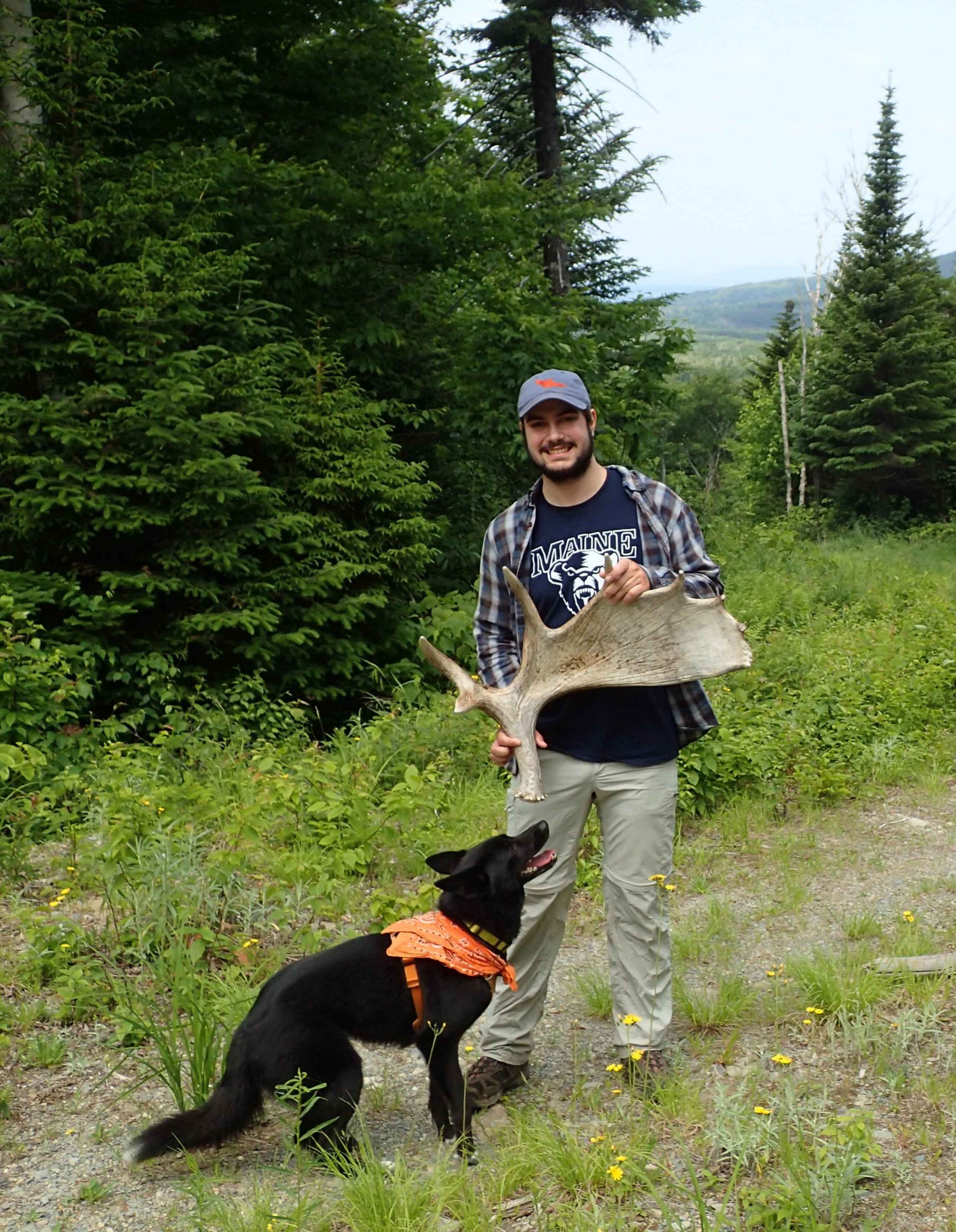
2019 Swan Intern in the woods holding a moose shed he found with a black dog standing next to him.
Found a moose shed!

In the office, I worked on a variety of projects. I used ArcGIS, a type of mapping software, to make maps of new project lands, wetlands, and other significant land features and trails. I read over conservation easements familiarizing myself with the language to get a better understanding of how an easement can be written to conserve different values of land. I also read various land trust magazines and literature, which gave me a deeper understanding of how the land trust community balances their objectives. Some organizations are more policy-oriented and others are more focused on direct on-the-ground action.

On field days, I participated in annual monitoring trips. I even got to fly over the Attean Pond conservation lands as part of FSM’s aerial monitoring. Other days, I rode to different parts of the Moosehead Region Conservation Easement and to areas in western Maine. While hiking around Violette Brook Reservoir I saw an area where some beavers had turned a once small stream into a decent-sized pond, flooding nearby trails and attracting great blue heron. I was able to see new and developing projects, such as the soon to be completed Fish River Chain of Lakes easement land.

Another part of my time this summer was spent attending meetings, the biggest of which was the FSM annual board meeting, where I met many of FSM’s board members. At these different meetings I sat in on some very interesting and productive discussions about current issues facing Maine’s North Woods.

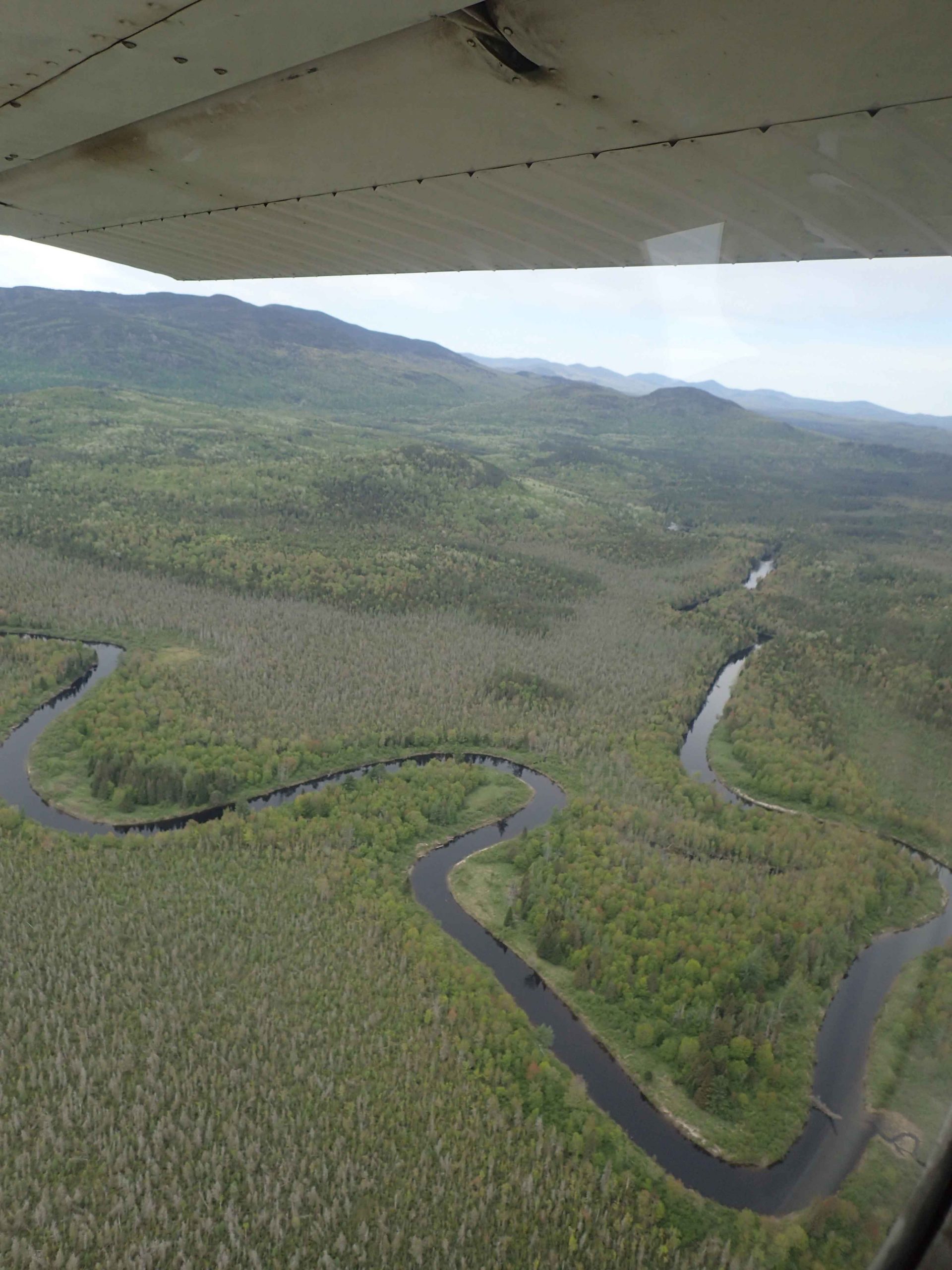
View from the window of a small plane looking down over the Moose River, near Attean, Maine. It's spring so the leaveas are bright green and you can see mountains in the distance, beneath the wing of the plane.
View from the plane of the Moose River while aerially monitoring near Attean Pond.

One of my major work assignments this summer was writing the first draft of a Baseline Documentation Report. I started by making maps and identifying points of interest, followed by a two-day field trip to the site, and eventually creating the written report. This was a great chance to use what I’ve learned in my studies as well as skills I picked up at FSM.

It’s hard to believe my time here has come to an end, but I feel as though I have done so much and I appreciated the opportunity to learn and grow.


Originally published in the FSM biannual newsletter, Forest View, in fall 2019.

Filed Under: Blog Tagged With: Swan Intern

The Power of Connectivity

January 10, 2020 By FSM

Looking south across Arnold Pond at Coburn Gore Forest in western Maine, near the Quebec border.
Looking south across Arnold Pond at Coburn Gore Forest.


Have you ever experienced the solitude of hiking for miles without seeing any buildings? On the other hand, have you ever watched wildlife try to cross a busy road? Experiences like this highlight how meaningful an interconnected landscape is for people and animals. That’s why the Forest Society of Maine (FSM) is thrilled to announce that two of our newest conservation projects in western Maine add to a continuous corridor of conserved land stretching across the western edge of Maine from New Hampshire to Canada. The Grafton Forest project and Coburn Gore Forest project encompass working forestlands that provide employment and raw materials for a variety of workers and businesses. Connected landscapes benefit forest management, enhance wildlife habitat, and provide resilience in the face of climate change.

Coburn Gore Forest Project

The 8,300-acre project area in Coburn Gore Township has been owned by the same family for decades. It boasts an exceptionally well-managed forest. The lands encompass the headwaters of the Dead River and Kennebec River; a grove of old growth trees, a unique bog ecosystem, and two state-designated Heritage brook trout ponds. Lands to the west and north of the Coburn Gore property, in Québec, are conserved provincial forest and recreation lands. To the south is the Boundary Headwaters Conservation Easement, conserved by FSM more than a decade ago.

Map showing corridor of conserved lands stretching from New Hampshire border to Quebec that these projects will help complete.
Click to enlarge.

In addition to the vast array of natural resource features, it has historical significance because the route Benedict Arnold took to Québec during the Revolutionary War traverses the property. Several important Arnold-related archaeological sites have been documented by the Maine Historic Preservation Commission and Arnold Expedition Historical Society. While remote, the property is adjacent to a transnational border crossing. Bringing conservation to Coburn Gore Forest will conserve its many habitats, natural resources, and scenic values in perpetuity and ensure that forest management can continue.

Grafton Forest Project

The Grafton Forest Project is located in Grafton, Riley, and Andover North Surplus Townships. Comprised of 21,300 acres this forest lies in a spectacular valley setting that showcases the surrounding mountain ranges and is highly visible from numerous mountain peaks such as Old Speck. It is frequented by people who hike, ski, snowshoe, and run dogsleds on the property. Local ATV and snowmobile clubs have also created an extensive network of trails that run through the property to adjacent trails in New Hampshire. To the east lies Grafton Notch State Park/the Mahoosuc Unit and a long stretch of the Appalachian Trail (AT) known for some of the most difficult terrain in the state. Within the project boundaries, there are two side trails that hikers use to access the AT. The easement will ensure the permanence of the trails, as well as continued public access to them. The easement is designed to permit sustainable forest management and will prohibit commercial and residential development. The project is widely supported by surrounding communities as it will sustain recreational activities on the property and buffer subdivision and development pressures from the south.

FSM will be working over the next few years to secure funding for these exceptional forest conservation easement projects. These projects present a wonderful chance to conserve and connect, forever, the ecological, economic, recreational, and cultural values across the western Maine mountains.

Filed Under: Blog, News Tagged With: Coburn Gore, Grafton

Fiction of the Maine Woods

January 10, 2020 By Erica

Although some very famous works of fiction may be set on the Maine coast (à la, Murder She Wrote), numerous novels and stories have also been written about and inspired by the history, communities, and remote landscape of interior Maine.

A writer sits at the base of Goodell Brook Falls.
A nature writer sits at the base of Goodell Brook Falls not far from the town of Monson, ME. Photo by Kimberly Ridley.

One such classic is Arundel, written by Pulitzer Prize-winning novelist and Maine author Kenneth Roberts. First published in 1930, Arundel is a fictionalized account of General Benedict Arnold’s arduous—and ultimately failed—campaign to wrest Québec City from the British in January 1776. Another Maine writer, Carolyn Chute, has spent decades examining poverty and small town living in books like The Beans of Egypt, Maine.

There’s just something about our state that screams “mystery,” because a huge number of books set here are crime novels, mysteries, and thrillers. Paul Doiron has received a lot of attention and awards for his series following fictional game warden, Mike Bowditch. Famed British thriller writer Lee Child even placed one of his Jack Reacher novels in Abbott.

Maine’s woods are unique in the Northeast for their vastness and opportunities for solitude, qualities that are vanishing from many of our busy lives. Quiet and solitude can be essential for enjoying a good book—and for writing one.  If you are a writer hoping to find inspiration in the Maine woods, we recommend you check out Monson Arts, a program of the Libra Foundation, which offers a paid residency program in the greater Moosehead Lake region. Readers looking for books and stories set in Maine can check out this online resource. For an index of Maine-based authors, visit the Maine State Library online.


Filed Under: Blog

Nordic skiers welcome at Nickerson Tree Farm

December 30, 2019 By FSM

By Erica Cassidy Dubois, FSM Forestland Steward
Printed in the Piscataquis Observer and Moosehead Matters

Groomed ski trails at Nickerson Tree Farm in Greenville (if you’re not skiing, please don’t crush the tracks!)


The Forest Society of Maine welcomes Nordic skiers of all ages and abilities to enjoy the trails, this winter, at Nickerson Tree Farm in Greenville. Located behind the Moosehead Lake Region Visitors’ Center—just a few miles south of town—the tree farm offers a 2.3-mile network of looping routes that will be groomed throughout winter, as conditions allow.

Anyone who has skied at Nickerson will tell you, it’s not just for beginners! The trails have hills, curves, and other features that make it fun and satisfying for skiers of almost every level.

If you make a visit to the Nickerson Tree Farm, please remember that maintaining good, groomed trails is a lot of work! Winter grooming and track-laying is made possible by NREC-Moosehead and their exceptional network of volunteers. Please respect that many hours and a lot of energy goes into making these trails excellent for everyone. Do not walk or snowshoe on groomed tracks—one person (or dog) will quickly destroy the trail surface for skiing. Bottom line: if you aren’t wearing five-foot sticks on your feet, please travel beside the tracks, or off-trail. Fat biking is not permitted.

The 80-acre Nickerson Tree Farm property was donated to the Forest Society of Maine in 2018 thanks to the generosity of Ellen Nickerson Poole. Mrs. Poole is the daughter of the late Dr. Norman Nickerson, who started his decades-long career as a physician in the Moosehead Lake region in 1920. For many years, Mrs. Poole invited the public to enjoy her property via the skiing trails that loop through the woodlot. Forest Society of Maine is proud to carry on this tradition.

A map of the Nickerson Tree Farm trails is available online, at Maine Trail Finder. You can also find out more about the tree farm and the Forest Society of Maine’s land conservation work at www.fsmaine.org.

Filed Under: Blog, News Tagged With: Moosehead Region, Nickerson Tree Farm

  • « Previous Page
  • 1
  • …
  • 8
  • 9
  • 10
  • 11
  • 12
  • …
  • 21
  • Next Page »

2026 Swan Internship Applications Open

2026 Swan Internship Program Applications review begins: February 2, 2026 The Forest Society of Maine … [Read More...]

Blog Posts

  • 2026 Swan Internship Applications Open
  • Giving Tuesday is Today – Double Your Impact!

Forest Society of Maine

209 State St, 2nd Floor
Bangor, Maine 04401
(207) 945-9200
info@fsmaine.org


PRIVACY POLICY

Sign up for FSM's E-News

  • Email
  • Facebook
  • Instagram
  • LinkedIn

Copyright © 2025 Forest Society of Maine · All Rights Reserved

Built with RainStorm Foundations & WordPress