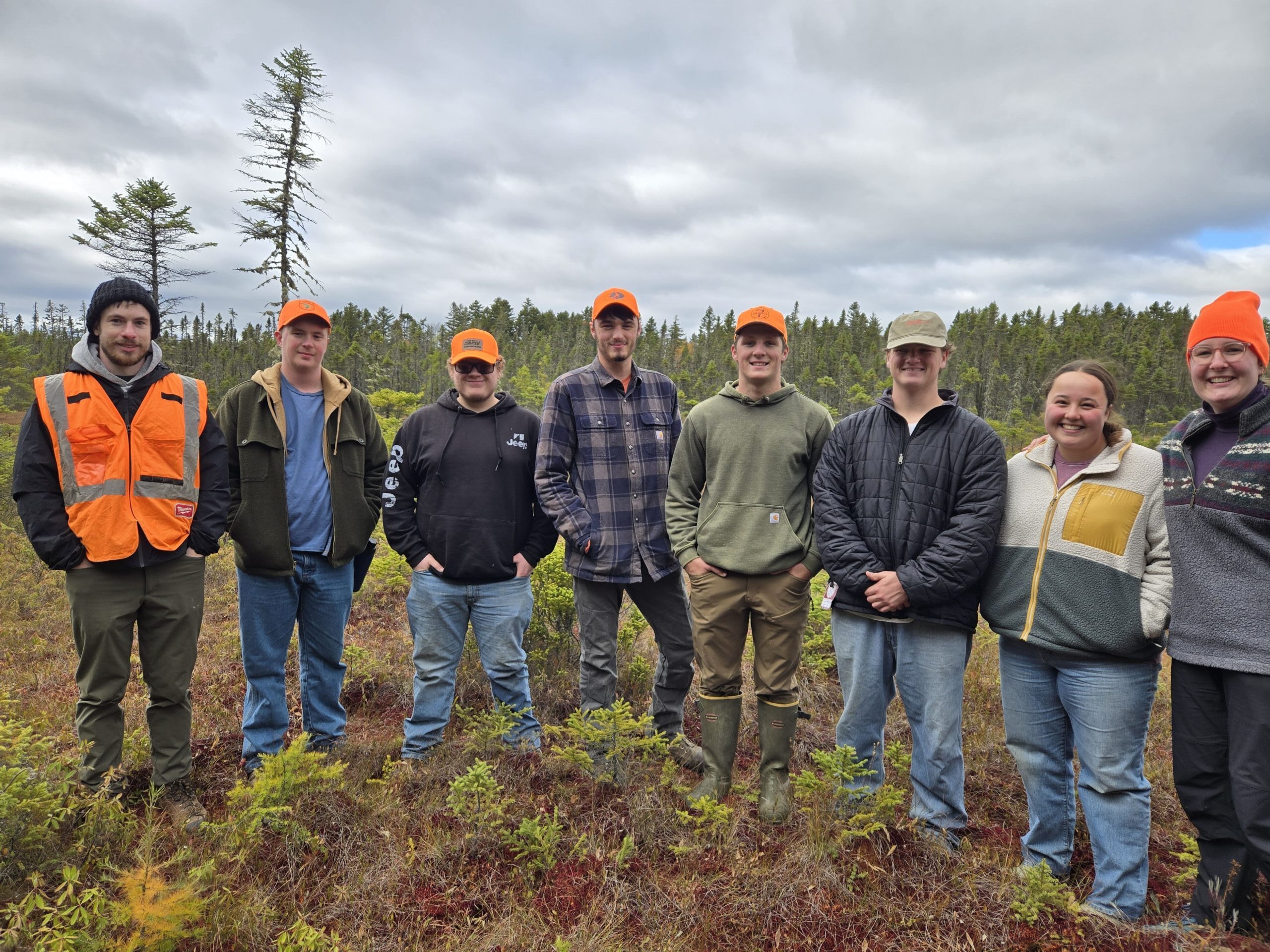
This October, seven students in the Forest Health course at the University of Maine at Fort Kent visited Tearmunn Hardwoods in Van Buren and Cyr Plantation, which is owned by Craig and Nancy Troeger and conserved by an FSM conservation easement. Led by Assistant Professor of Forestry at UMFK Caroline Kanaskie, the class came to learn about and look for signs of alternate host relationships utilized by different species of rust fungi.
Ribes species (currants and gooseberries) are well known alternate hosts for the blister rust fungi and are infected first before affecting Maine’s white pines. However, did you know about other similar host pairings essential for other rust species? Spruce needle rust and Labrador tea, Witches’ broom of blueberries and balsam fir, and Fir-Fern rust between balsam fir trees and certain fern species (especially bracken and sensitive). These are just a few examples that students learned about during their visit. Craig noted, “If Dr. Kanaskie had had more time, she could have told us of even more alternate host relationships”. He was happy to have the class visit this special spot. The students, some of whom had never seen some of the unusual plants that live in bogs, were curious and enthusiastic.
Tearmunn Hardwoods was conserved by FSM with two conservation easements in 2007 and 2009 and is a great example of working with conservation-minded landowners with a passion for sustainable forest management.